

By age 35, approximately two-thirds of men will experience some degree of hair loss. By age 50, that number climbs to around 85%. Male pattern baldness, clinically known as androgenetic alopecia, affects millions of men worldwide, impacting not just appearance but confidence and quality of life. While traditional treatments like topical solutions and oral medications have been the standard for decades, a regenerative approach is gaining significant attention in hair restoration clinics: Platelet-Rich Plasma (PRP) therapy.
In this comprehensive guide, we’ll explore the science behind PRP therapy, how the treatment works, and whether it might be the right hair restoration solution for you.
Understanding Male Pattern Baldness
Before diving into how PRP therapy works, it’s important to understand what you’re treating. Male pattern baldness is a genetic condition influenced primarily by androgens—male hormones like testosterone and its more potent derivative, dihydrotestosterone (DHT).
The Role of DHT in Hair Loss
DHT binds to androgen receptors in genetically susceptible hair follicles, particularly those along the hairline and crown. This binding triggers a process called follicular miniaturization, where healthy terminal hairs gradually shrink into shorter, finer vellus hairs over successive growth cycles. Eventually, affected follicles may stop producing visible hair altogether, though they often remain alive in a dormant state.
Progression Patterns
Male pattern baldness typically follows predictable patterns, starting with a receding hairline at the temples or thinning at the crown. These areas eventually expand and may merge, creating the classic “horseshoe” pattern of hair around the sides and back of the scalp. The progression varies significantly between individuals. Some men experience rapid hair loss in their 20s, while others maintain considerable hair density well into their 50s or beyond.
Understanding where you are in this progression is crucial when considering any hair loss treatment, including PRP therapy, as timing can significantly impact results.
What is PRP Therapy?
Platelet-Rich Plasma therapy is a regenerative medicine treatment that concentrates your body’s natural healing components to stimulate tissue repair and growth. Originally developed for use in sports medicine and orthopedics to accelerate healing, PRP has found applications across various medical fields, including dermatology and hair restoration.
The Science of Platelets and Growth Factors
Your blood contains four main components: red blood cells, white blood cells, plasma (the liquid portion), and platelets. While platelets are best known for their role in blood clotting, they’re also rich repositories of growth factors—proteins that regulate cell growth, healing, and tissue regeneration.
When you concentrate platelets through the PRP process, you’re essentially creating a powerful cocktail of growth factors including:
- Platelet-Derived Growth Factor (PDGF): Promotes cell replication and blood vessel formation
- Vascular Endothelial Growth Factor (VEGF): Stimulates blood vessel development, improving nutrient delivery to follicles
- Epidermal Growth Factor (EGF): Encourages cell growth and differentiation
- Insulin-Like Growth Factor (IGF): Supports cell proliferation and inhibits cell death
- Transforming Growth Factor-Beta (TGF-β): Regulates cell growth and immune response
These growth factors work synergistically to create an optimal environment for hair follicle health and regeneration.
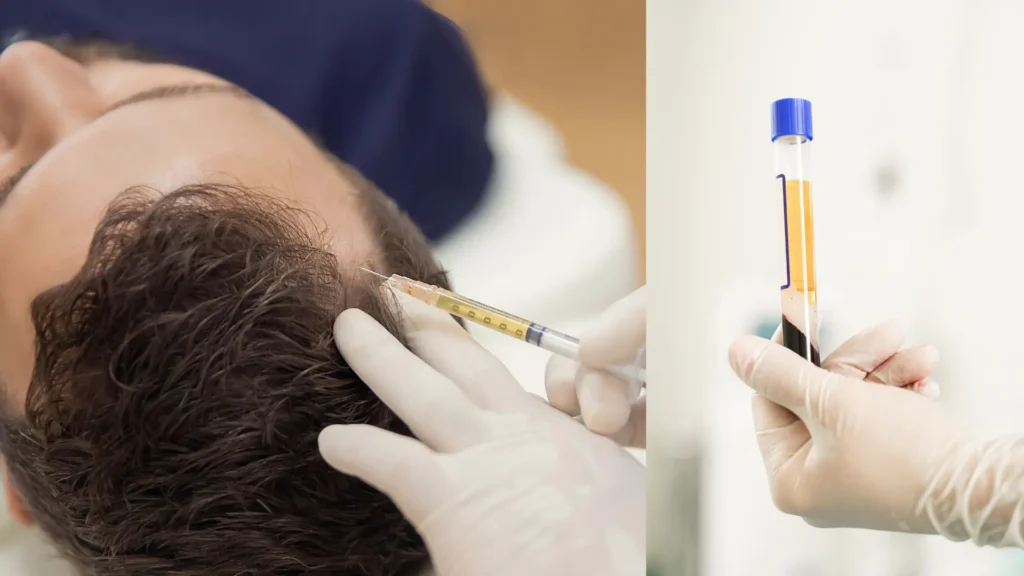
The PRP Procedure: What to Expect
Understanding the treatment process can help alleviate anxiety and set realistic expectations for your PRP therapy journey.
Step 1: Blood Collection
Your practitioner will draw a small amount of blood from your arm—typically between 10-60 milliliters, depending on the protocol and treatment area. This is a quick, routine procedure similar to any blood test you’ve had before.
Step 2: Centrifugation and Processing
The blood sample is placed in a centrifuge machine that spins at high speeds for several minutes. This process separates the blood into distinct layers: red blood cells settle at the bottom, platelet-rich plasma in the middle, and platelet-poor plasma on top. Your practitioner carefully extracts the concentrated platelet layer, which will be used for your treatment.
Step 3: Scalp Preparation and Injection
Before injections begin, your scalp will be cleansed and may be numbed with a topical anesthetic to minimize discomfort. Using a fine needle, your practitioner will strategically inject small amounts of PRP across areas of thinning or hair loss—typically the hairline, crown, or other affected regions.
The injection pattern is carefully planned to ensure comprehensive coverage of treatment areas. Most patients describe the sensation as mild pressure or slight pinching, generally well-tolerated with topical numbing.
Treatment Duration
The entire process, from blood draw to completion of injections, typically takes 40-60 minutes. There’s minimal downtime—most patients return to normal activities immediately.
Why PRP Works for Hair Loss
The effectiveness of PRP therapy for male pattern baldness lies in its multi-mechanism approach to follicle health and hair regrowth.
Stimulating Dormant Hair Follicles
Growth factors in PRP can help “wake up” hair follicles that have entered a prolonged resting phase. By delivering concentrated growth signals directly to the scalp, PRP encourages these dormant follicles to re-enter the active growth phase (anagen), producing new hair shafts.
Prolonging the Growth Phase
PRP therapy may extend the duration of the anagen phase, allowing hair to grow longer and thicker before naturally shedding. This is particularly beneficial for androgenetic alopecia, where DHT progressively shortens the growth phase over time.
Increasing Blood Supply to Follicles
The VEGF and other angiogenic factors in PRP promote the formation of new blood vessels around hair follicles. Improved vascularization means better nutrient delivery, oxygen supply, and waste removal—all essential for optimal follicle function and healthy hair production.
Reducing Inflammation and Follicle Damage
Chronic low-grade inflammation around hair follicles can contribute to hair loss progression. PRP contains anti-inflammatory cytokines that help modulate the inflammatory response, creating a healthier scalp environment that supports hair retention and regrowth.
Strengthening Existing Hair
Beyond stimulating new growth, PRP therapy can improve the health and thickness of existing hair. Many patients notice that their current hair feels stronger, appears shinier, and shows increased diameter even before new growth becomes visible.
Who is a Good Candidate for PRP Therapy?
PRP therapy isn’t equally effective for all stages and types of hair loss. Understanding whether you’re a suitable candidate can help you make an informed decision.
Ideal Candidates
You may be an excellent candidate for PRP treatment if you:
- Have early to moderate male pattern baldness with active hair follicles
- Are experiencing recent hair thinning or changes in hair density
- Have areas of diffuse thinning rather than completely bald patches
- Want a non-surgical, natural approach to hair restoration
- Are willing to commit to multiple treatment sessions
- Have realistic expectations about gradual improvement
Less Ideal Candidates
PRP therapy may be less effective if you have:
- Extensive baldness with completely smooth, shiny scalp areas (indicating follicle death)
- Very advanced pattern baldness where follicles have been dormant for many years
- Hair loss due to autoimmune conditions, nutritional deficiencies, or other non-androgenetic causes
- Certain blood disorders or medical conditions that affect platelet function
A consultation with a qualified hair restoration specialist can determine whether PRP therapy aligns with your specific situation and goals.
What to Expect: Sessions, Recovery, and Side Effects
Treatment Schedule
Most patients begin with a series of 4-6 PRP sessions spaced 2-3 weeks apart. This initial intensive phase allows for cumulative effects as growth factors continuously support follicle regeneration. Following the initial series, maintenance treatments every 1-2 months help sustain improvements.
Your clinician will customize your treatment schedule based on your hair loss pattern, goals, and response to therapy.
Recovery and Downtime
One of PRP therapy’s major advantages is minimal downtime. Most patients experience:
- Mild redness or tenderness at injection sites for 1-2 days
- Possible slight swelling of the scalp (uncommon)
- Return to normal activities within hours of treatment
You may be advised to avoid washing your hair for 24 hours post-treatment and to limit strenuous exercise for a day or two. Overall, PRP fits easily into most lifestyles without significant disruption.
Potential Side Effects
Because PRP uses your own blood components, the risk of allergic reaction or rejection is minimal. Potential side effects are generally mild and may include:
- Temporary scalp tenderness or soreness
- Mild bruising at injection sites
- Rare: infection at injection sites (minimized through proper sterile technique)
- Temporary increased shedding as follicles transition into new growth cycles (uncommon)
Serious complications are rare when PRP therapy is performed by qualified, experienced practitioners using proper protocols.
Conclusion: Is PRP Therapy Right for You?
The key to success with PRP therapy lies in early intervention, realistic expectations, and personalized treatment planning. If you’re experiencing male pattern baldness and wondering whether PRP therapy could help, the first step is simple: schedule a consultation with a hair loss clinic experienced in regenerative medicine. Together, you can explore your options, review the latest evidence, and develop a personalized plan to address your hair thinning and restore your confidence.
Don’t let hair loss define your future. With advances in regenerative treatments like PRP therapy, effective, science-backed solutions are more accessible than ever. Take control of your hair restoration journey today.


 +61 406 888 546
 admin@cosmedhairskin.com.au
 Brisbane Bowen Hills: 10/7 O'Connell Tce, Bowen Hills QLD 4006