
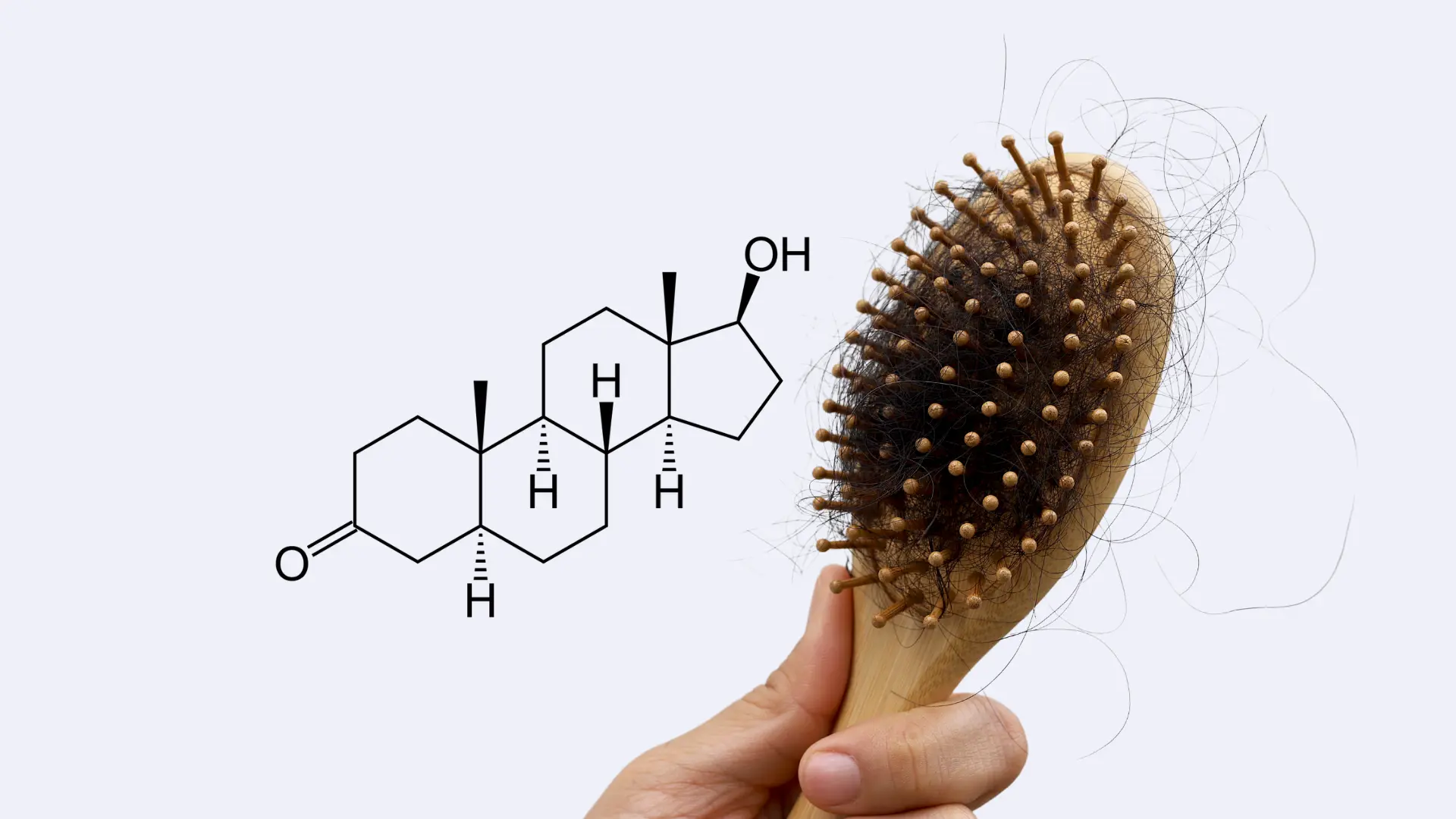
You’ve noticed more hair in your brush lately. The part in your hair seems wider, or perhaps your hairline has started to recede. You might be wondering: Why is this happening to me? If you’re experiencing hair thinning or pattern baldness, hormones (particularly DHT and testosterone) could be behind the changes you’re seeing.
Hair loss affects millions of people worldwide, and understanding the hormonal mechanisms at play is the first step toward finding effective solutions. While it’s easy to feel discouraged when you notice thinning hair, knowledge is empowering. In this article, we’ll explore how hormones like DHT influence hair growth, the differences between male and female pattern hair loss, and what treatment options are available to help restore your hair density and confidence.
Understanding DHT: The Hormone Behind Hair Loss
What Is DHT?
Dihydrotestosterone, or DHT, is a powerful androgen hormone derived from testosterone. An enzyme called 5-alpha reductase converts approximately 10% of your body’s testosterone into DHT. While DHT plays important roles in the development of male characteristics during puberty, it can become problematic for your hair follicles as you age.
DHT is actually much more potent than testosterone—about three times stronger when it comes to binding to androgen receptors. When DHT attaches to receptors in genetically susceptible hair follicles, it triggers a process called miniaturization. This causes hair follicles to gradually shrink, producing thinner, shorter, and lighter hair with each growth cycle until they eventually stop producing visible hair altogether.
The Hair Growth Cycle and DHT Disruption
To understand how DHT causes hair loss, it helps to know about the natural hair growth cycle. Each hair follicle on your scalp goes through three phases:
Anagen (Growth Phase): This active growing phase lasts 2-7 years. The longer your hair stays in anagen, the longer it can grow.
Catagen (Transition Phase): A brief 2-3 week period when hair follicles shrink and detach from the blood supply.
Telogen (Resting Phase): Hair rests for about 3 months before falling out, making room for new growth.
In healthy hair growth, about 85-90% of your hair follicles should be in the anagen phase at any given time. However, when DHT binds to sensitive follicles, it progressively shortens the anagen phase. Your hair spends less time growing and more time resting. Over time, affected follicles produce hair that’s barely visible—those fine, colorless “vellus” hairs that can’t provide the coverage you once had.
Male vs. Female Pattern Hair Loss
Androgenetic Alopecia in Men
Male pattern baldness, clinically known as androgenetic alopecia, typically follows a predictable pattern. You might first notice a receding hairline at the temples, forming an “M” shape. Thinning at the crown often follows, and these areas may eventually merge, leaving hair only on the sides and back of the scalp.
This pattern occurs because hair follicles in these specific areas have more androgen receptors and higher levels of 5-alpha reductase. The follicles on the sides and back of your head are generally resistant to DHT, which is why these areas maintain hair growth even in advanced hair loss.
Female Pattern Hair Loss
Women experience hormonal hair loss differently. Rather than developing a receding hairline, you’re more likely to notice diffuse thinning across the top of your scalp, particularly along your part line. The frontal hairline typically remains intact, but overall hair density decreases, making your scalp more visible.
Female pattern hair loss often becomes noticeable during times of hormonal change—after pregnancy, during perimenopause, or following menopause when estrogen levels decline. While women have lower testosterone levels than men, they still produce DHT, and some follicles remain sensitive to its effects. The pattern differs partly because women have lower concentrations of 5-alpha reductase in frontal scalp areas.
The Genetic Factor: Why Some People Are More Affected
If you’re experiencing pattern baldness, you can partially thank (or blame) your genetics. Hair loss isn’t simply inherited from your mother’s father, as the old myth suggests—it’s actually polygenic, meaning multiple genes from both parents influence your susceptibility.
What you inherit isn’t hair loss itself, but rather the sensitivity of your hair follicles to DHT. Two people with identical DHT levels may have completely different experiences with hair loss based on how many androgen receptors their follicles contain and how sensitive those receptors are.
Research shows that if both of your parents experienced hair loss, you’re more likely to as well. However, genetics isn’t destiny. Understanding your risk factors allows you to take proactive steps earlier, potentially slowing or preventing significant hair thinning.
Other Hormonal Contributors to Hair Loss
While DHT gets most of the attention in discussions about hormonal hair loss, other hormones play supporting roles in your hair’s health.
Thyroid Hormones
Your thyroid regulates metabolism throughout your body, including in your hair follicles. Both hyperthyroidism (overactive thyroid) and hypothyroidism (underactive thyroid) can trigger hair loss. Thyroid-related hair loss typically presents as diffuse thinning rather than pattern baldness, and addressing the underlying thyroid condition often improves hair growth.
Cortisol and Stress
Chronic stress elevates cortisol levels, which can push more hair follicles into the telogen (resting) phase prematurely. This creates telogen effluvium—temporary but sometimes dramatic hair shedding that occurs 2-3 months after a stressful event. While telogen effluvium differs from androgenetic alopecia, chronic stress can worsen DHT-related hair loss.
Estrogen
Estrogen is hair-protective, promoting longer anagen phases and counterbalancing androgen effects. This explains why some women experience temporary hair thickening during pregnancy when estrogen levels peak, followed by shedding postpartum. The decline in estrogen during menopause can unmask previously dormant androgenetic alopecia.
Recognizing the Signs and Symptoms
Early detection makes treatment more effective, so it’s important to recognize the warning signs of hormonal hair loss:
- Gradual hair thinning: You notice your ponytail feels thinner, or you can see more scalp through your hair
- Receding hairline: The hairline moves backward, particularly at the temples
- Widening part: The part in your hair becomes progressively wider and more visible
- Increased shedding: More than the normal 50-100 hairs per day falling out
- Smaller, finer hair: New hair growth appears thinner and shorter than before
- Visible scalp: Areas of the scalp become more noticeable, especially under bright lighting
If you’re experiencing these symptoms, particularly if hair loss runs in your family, consulting a hair loss specialist or trichologist can provide clarity about what’s happening and what options are available.
Treatment Options for Hormonal Hair Loss
The good news is that hormonal hair loss doesn’t have to be permanent. Several evidence-based treatments can slow hair loss, stimulate regrowth, and improve hair density.
Medical Treatments
Minoxidil is a topical treatment that extends the anagen phase and increases blood flow to hair follicles. It’s available over-the-counter and works for both men and women, though results vary by individual.
Finasteride (and its related medication dutasteride) works by inhibiting 5-alpha reductase, reducing DHT production. These prescription medications are FDA-approved for men and can significantly slow hair loss and promote regrowth in many cases.
Anti-androgen medications like spironolactone may be prescribed for women with hormonal hair loss, particularly when associated with conditions like polycystic ovary syndrome (PCOS).
Regenerative Treatments
Platelet-Rich Plasma (PRP) and Platelet-Rich Fibrin (PRF) treatments have gained recognition as effective, natural approaches to hair restoration. These procedures use your body’s own growth factors to stimulate hair follicles, improve scalp health, and encourage hair regrowth.
PRP involves drawing a small amount of your blood, processing it to concentrate platelets, and injecting it into areas of thinning. The growth factors in platelets promote healing, increase blood supply to follicles, and can extend the anagen phase. PRF is a more advanced version that releases growth factors more slowly and sustainably.
Many patients combine PRP or PRF with other hair loss treatments for enhanced results. These regenerative approaches work well for individuals in earlier stages of hair loss when follicles are still active.
Other Options
For more advanced hair loss, hair transplant procedures offer permanent restoration by relocating DHT-resistant follicles from the back of the scalp to thinning areas. Modern techniques like FUE (Follicular Unit Extraction) create natural-looking results with minimal scarring.
Low-level laser therapy (LLLT) devices use red light to stimulate cellular activity in hair follicles, and some studies show promise for improving hair density when used consistently.
When to See a Hair Loss Specialist
If you’ve noticed progressive hair thinning or any of the signs mentioned earlier, it’s worth scheduling a consultation with a hair restoration specialist. They can:
- Evaluate your specific pattern and stage of hair loss
- Perform scalp analysis to assess follicle health
- Order hormone testing if appropriate
- Recommend evidence-based treatments tailored to your situation
- Create a comprehensive treatment plan to address your concerns
Early intervention often yields better results because treatments work best when hair follicles are still active, even if miniaturized. Once follicles become dormant for extended periods, reversing hair loss becomes more challenging.
Moving Forward with Confidence
Understanding the hormonal mechanisms behind your hair loss removes some of the mystery and frustration from the experience. While DHT and testosterone play significant roles in pattern baldness, remember that effective treatments exist, and hair restoration technology continues to advance.
Your hair loss journey is unique, influenced by your genetics, hormone levels, overall health, and lifestyle factors. Whether you’re in the early stages of thinning or have been dealing with hair loss for years, professional guidance can help you explore options that align with your goals and expectations.
Take that first step—schedule a consultation at Cosmed HairSkin Solutions. With the right approach, you can work toward improving your hair density, slowing further loss, and regaining the confidence that comes with healthier, fuller-looking hair. Your hair restoration journey starts with understanding, and you’ve already taken an important step by educating yourself today.






 +61 406 888 546
 admin@cosmedhairskin.com.au
 Brisbane Bowen Hills: 10/7 O'Connell Tce, Bowen Hills QLD 4006